
INDUSTRY INSIGHTSlogistics bottleneck MEA
wHY MILLS LOSE Time: the hidden bottlenecks
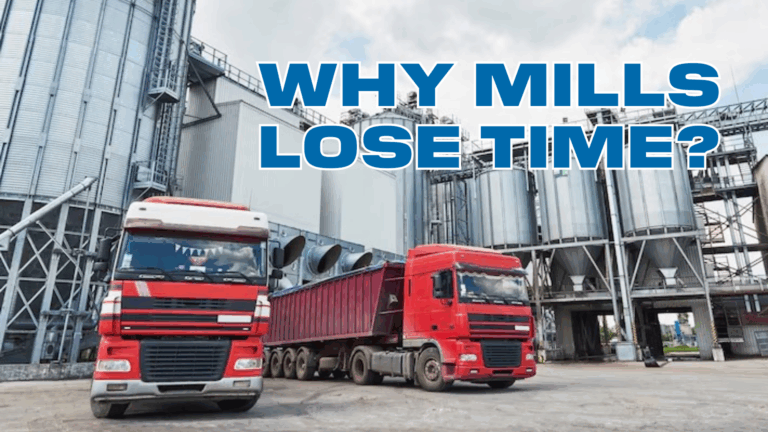
Most mills don’t fall behind because of milling. They fall behind long before the grain ever reaches the first roller.
Across the Middle East and Africa, millers are dealing with unpredictable arrivals, fluctuating intake, and pressure to keep production steady. But the root cause of these headaches rarely sits inside the mill. It sits upstream — in the parts of the supply chain that no one sees until something goes wrong.
At IMGS Group, working across ports, warehouses, silos, and inland corridors, we’ve seen the same patterns repeat in every market. No matter the country, no matter the commodity, the challenges tend to show up in three familiar places.
1. Port Congestion: Where delays truly begin
The milling day really starts at the port. And for many mills, that’s exactly where they begin losing time.
Slow or uneven discharge, vessel queues, and truck lines that stretch for hours create a domino effect that hits production days later. In busy MEA ports, trucks can wait 18–36 hours, and when a vessel slips behind schedule, mills feel it immediately.
A single delayed vessel can derail intake for three to five days, forcing mills to reshuffle shifts, adjust blends, or simply wait. It’s not surprising that 40% of MEA mills list port delays as their biggest operational bottleneck.
2. Storage Limits: When management falls behind supply
Storage isn’t the villain here — poor storage flow is.
Mismatched rotation, inconsistent ventilation, and long dwell times create moisture pockets and unstable grain conditions. That inconsistency travels straight to the mill intake, affecting extraction rates, blending, and energy use.
Across the region, 60% of grain losses happen because of improper storage management, not transport. When storage flow slows down, milling inevitably slows down with it.
3. Corridor Chaos: When the shortest distance becomes the longest delay
The final stretch from port to mill should be the simplest part. Instead, it often becomes the most unpredictable.
Weighbridge queues add 3–7 hours. Truck turnaround can swing ±6–12 hours depending on congestion, dispatch timing, or even weather. Grain arrives in bursts instead of a steady flow, and mills end up planning around whatever shows up at the gate.
Corridor delays can erase up to 35% of intake predictability, leaving mills to operate on guesswork rather than scheduling.
How IMGS Group Keeps the Flow Moving
We support mills by stabilising grain movement at every step:
- High-throughput, efficient vessel discharge
- Mobile bagging at ports, warehouses, or silos
- Smarter storage planning and grain flow management
- Coordinated port-to-mill dispatch
- Consistent, predictable grain intake
A mill can only run as fast as the grain that feeds it.
Our role is to make sure that flow never stops.
RELATED SERVICES logistics bottleneck MEA
Maximize your investment and competitive advantage with IMGS Group related services
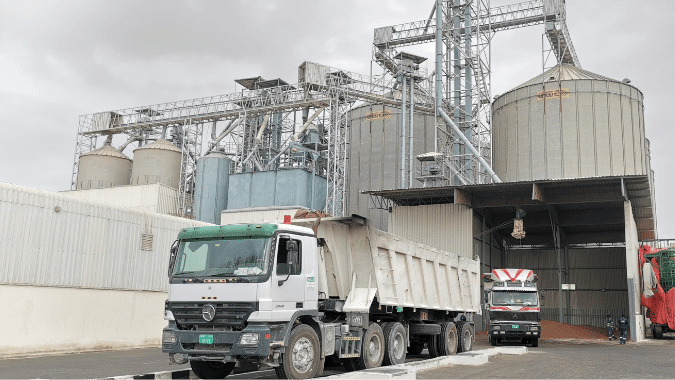
TERMINAL & SILO MANAGEMENT
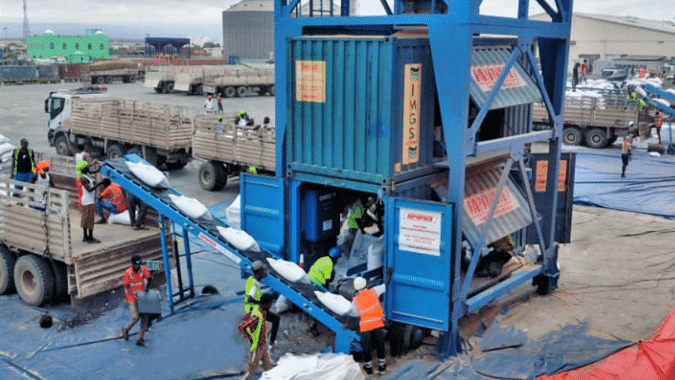
Mobile Bulk Bagging
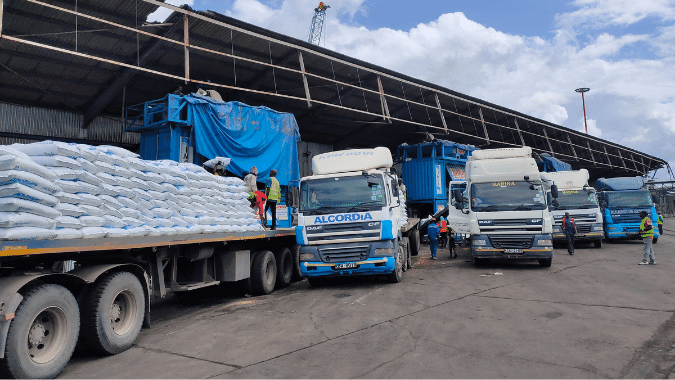
Inland Distribution
Get your customized solutions now!